
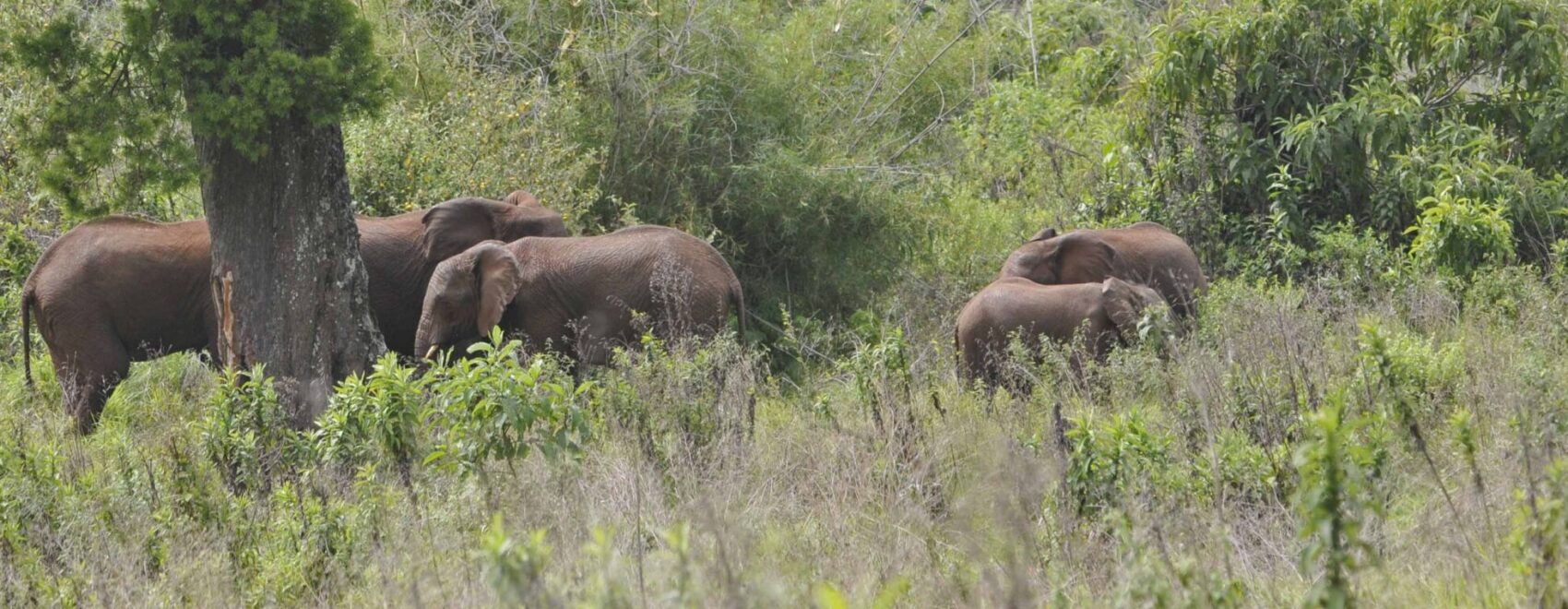
New research from Mount Elgon offers fascinating new clues about how its extraordinary cave-mining elephants may use particular plants when they are unwell.
Drawing on the knowledge and observations of Sabaot experts who have spent decades living and working alongside elephants, the study explores whether some of these behaviours could be a form of self-medication.
Read the research by clicking here
Discover Mount Elgon’s elephants by clicking here
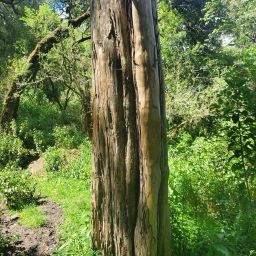
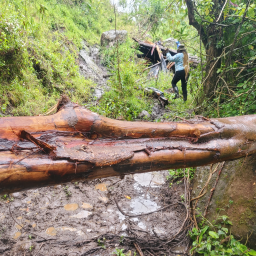
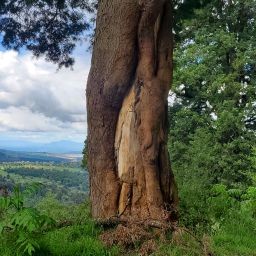
Banner: elephants grazing at the intersection of the Podo and bamboo zones (Credit: Stephen Powles); Left: Trunk of Podocarpus latifolius (Podo tree) showing elephant tusking of bark. (Credit: Schultz et al); centre: Dombeya rotundifolia with elephant tusk marks (Credit: MEF); right: trunk of Juniperus procera (Cedar tree) showing suspected elephant tusking. (Credit: Schultz et al).
WHAT DID THE RESEARCHERS FIND?
Researchers worked with eight Sabaot experts from Mount Elgon, including East African Wild Life Society – Mount Elgon Elephant Project (EAWLS-MEEP) scouts, community guides and village elders. They described elephants selecting particular plants when apparently unwell and, in some cases, mothers administering plant material to their calves. The scientists include MEF Trustee, Emmanuel Ndiema, and his close National Museums of Kenya (NMK) colleagues, Rahab Kinyanjui and Jonathan Sila.
The research does not prove that elephants intentionally self-medicate. Instead, it identifies behaviours that the researchers believe warrant further investigation, including studying the plants themselves and how knowledge of them may be acquired or passed between elephants.
39 natural resources documented
35 plant species from 23 families and 4 types of soil or clay
34 identified by the experts to be used for traditional human medicinal use
25 perceived by the experts as having a medicinal function for elephants
9 of the 10 plants most cited by the experts previously reported in the scientific literature as having pharmacological activity
8 plants linked by the experts to a specific perceived therapeutic purpose in a sick or vulnerable elephant, or to mothers administering plant material to their offspring
KNOWLEDGE ROOTED IN MOUNT ELGON
At the heart of this research is local knowledge.
All eight experts interviewed were members of the Sabaot community, with extensive experience of Mount Elgon, its plants and its elephants. Their observations provided the starting point for investigating behaviours that would otherwise be extremely difficult to study.
The striking overlap between plants associated with elephant behaviour and those used in traditional human medicine also highlights how much can be learnt when long-term local knowledge and scientific research come together.
MOUNT ELGON’S REMARKABLE ELEPHANTS
Mount Elgon is home to an unusual population of elephants, famous for travelling far into caves to access mineral-rich deposits. Through EAWLS-MEEP, we are building a better understanding of their movements and behaviour using field patrols, camera traps, satellite tracking and long-term observation, while also working to support the communities living alongside them.
The sustained presence on the mountain and the knowledge of the people who know these elephants best is helping reveal just how much we still have to learn about them.
Learn more about EAWLS-MEEP by clicking here
WHY DOES THIS MATTER?
Learning how elephants use Mount Elgon helps us understand what they need to survive. If particular plants, caves, areas of the forest and movement routes play important roles in their lives, conserving these elephants means it is critical to protect those resources as well as the wider landscape they depend upon and supporting the communities who share the mountain with them. This research gives us another glimpse into the remarkable complexity of Mount Elgon’s elephants, and another reason to protect their future.
Explore our work by clicking here
Support MEF by clicking here
ABOUT THE RESEARCH
The study was proposed by the Mount Elgon Foundation when it learnt that local people believe Mount Elgon’s elephants self-medicate. It has then been led by Dr Fabien Schultz of the Bernhard Nocht Institute for Tropical Medicine and his team, working with Sabaot experts from Mount Elgon (including EAWLS-MEEP scouts) and the key scientists from NMK referred to above.
Read the research by clicking here
The Mount Elgon Foundation’s partners in this research are the Bernard Nocht Institute of Tropical Medicine, the East African Wild Life Society – Mount Elgon Project and National Museums of Kenya.
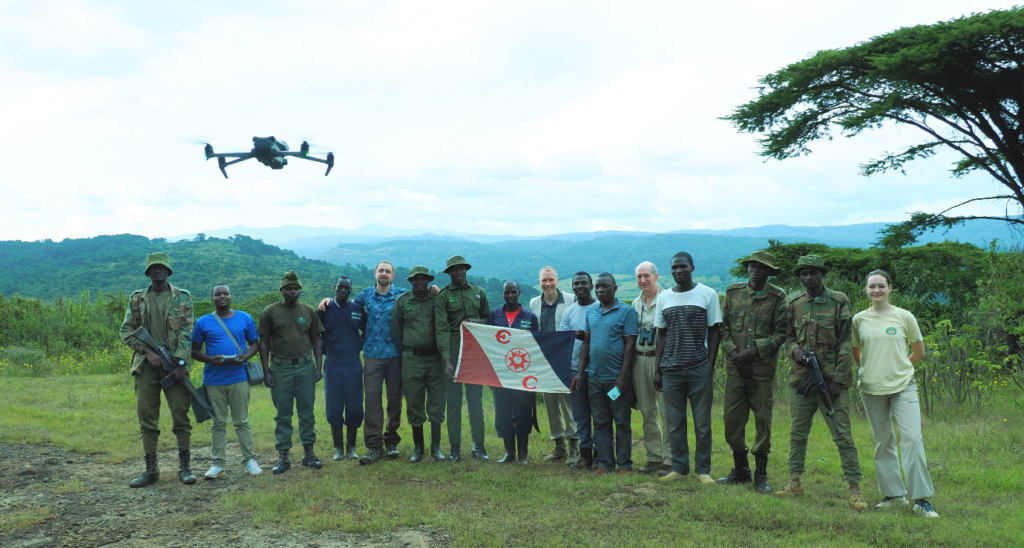
Above: Researchers from the Bernhard Nocht Institute for Tropical Medicine on Mt Elgon with the Mount Elgon Foundation chair, EAWLS-MEEP scouts, a member of the local community, Mount Elgon Foundation water project caretakers and staff from Kenya Forest Service and National Museums of Kenya. (Credit: Schultz et al.)